By Amy, Senior Youth Worker
International Women’s Day was founded in 1911, 114 years ago, and there are still many issues women face across the globe. These affect our advancement in the workplace, our financial independence, our rights as human beings, and, as has always been the case, our safety. This day, and month, isn’t just for women to celebrate, it’s for anyone who cares about women and achieving gender equality. In fact, the more allies, the more equality, which means everyone benefits!
This year’s theme is ‘Accelerate Action’, which emphasises the importance of taking decisive steps to achieve gender equality. The International Women’s Day website states that, according to data from the World Economic Forum, “…at the current rate of progress, it will take until 2158, which is roughly five generations from now, to reach full gender parity”. That is another 126.5 years from now. Let that sink in. Anyone reading this right now, will not be here to see it. Anyone born today won’t be here to benefit from it. If I was to have children, this parity may reach my great, great, great grandchild. To anyone who says ‘you’ve got equality now haven’t you? Just get over it(!)’ remind them, (with a smile, so as not to scare them off), all we’re striving for, (not asking for), is parity; “…the state or condition of being equal, especially as regards to status or pay,”[i] not above, higher, over, more, greater, or any other word that may be interpreted to mean men must be, or have less.
“As a woman in the workplace, I prefer to be greeted with a firm handshake immediately followed by equal pay”[ii] – Liz Plank
However, equality in the workplace does not just mean equal pay for the same job, it should consider levels of experience, training, qualifications, work ethic, and achievements prior to and within the current role. Additionally, we should think about why some employees may have less professional experience than others in the organisation. For us at Peer Power Youth, being a social justice charity, we know first-hand, through many of our staff and all of our Young Partners, how valuable lived experience is, and we centre, platform, and champion individual expertise that can be even more valuable than learned experience. We recognise that individuals may have not been given opportunities to further their careers due to the systems they are, or have lived in, such as care and criminal justice, both of which intersect with a multitude of characteristics and circumstances, such as race, ethnicity, socioeconomic factors, gender inequalities, disability, neurodivergence, religion, and culture.
When looking at this on International Women’s Day , we can see that women may have been held back in the workplace, due to many of the factors above, but also perhaps due to limiting beliefs and actions that have prevented women from progressing in line with men at previous companies, for example, the assumption women will take maternity leave at some point in their career, and therefore a man may be promoted over her, being seen as more ‘reliable’. If maternity leave is taken, this can also lead to a long period away from work, which may put women further behind on their return. This can also have a negative impact on women’s mental health and induce feelings of needing to return to work earlier and separate form their child sooner.
Another consideration is that the female body goes through phases that do not coexist well with a corporate office space, lots of travel for work, or, particularly for us at Peer Power Youth, a secure estate or prison facility, where you can’t often nip to the loo, take in any period products, or leave the space whenever you need to.
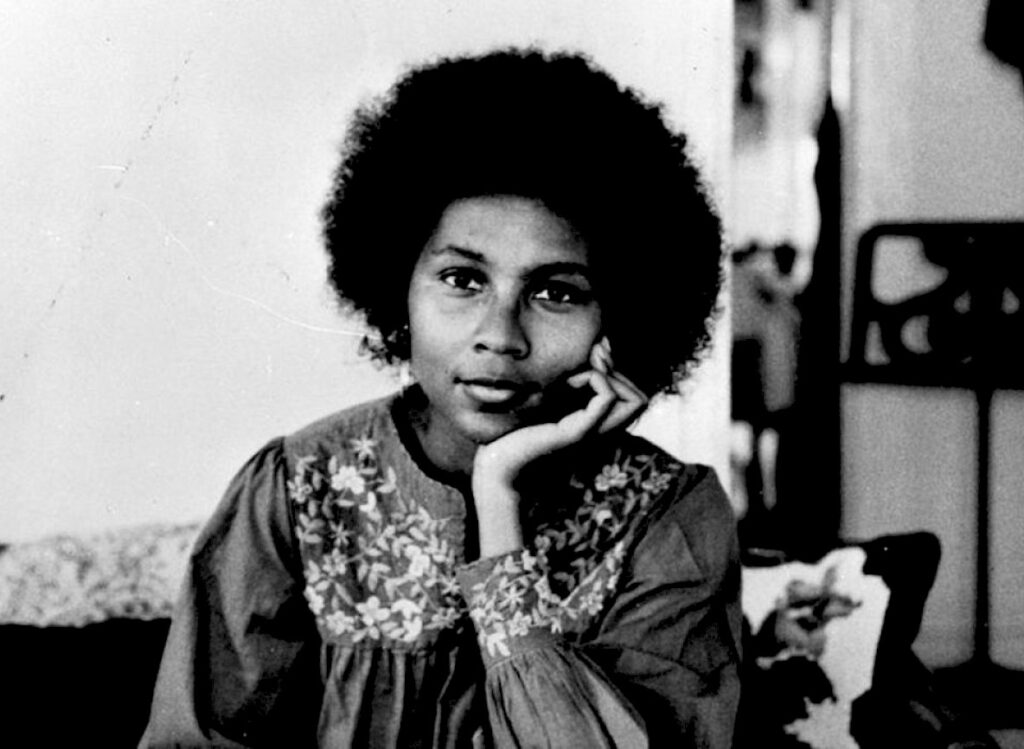
“Reformist feminism…as hooks calls it, focuses on gaining equality with men in the existing system, a system she famously describes as, imperialist, white supremacist, capitalist patriarchy. In that system, women seek to have the same salaries of men, instead of questioning the work arrangements that make workplaces so inhospitable to so many women, (and other folk)…Reformist feminists…accept and even collude with the subordination of working class and poor women…gain(ing) economic power within the existing social structure…Visionary or revolutionary feminism, hooks explains, seeks to transform the system itself…so we can, live lives where we love justice, where we can live in peace.”[iii] – Bell Hooks
We have two Co-CEOs at Peer Power Youth, both of whom are women, (groundbreaking). But no, it really is, one of our CEOs is also the Founder of our charity. Recently there has been a lot of work taking place within the Senior Leadership Team (two men, two women), to rewrite our policies, of which Maternity & Paternity, and Menstruation & Menopausal policies are being further developed, the latter of which include how to support those working and living with PCOS, Endometriosis, Fibroids, and other debilitating conditions. Not only this, but all staff members are now invited to the meetings where the policies are discussed, consulted on, and co-written. That’s right, all staff. Definitions are written into the policies, so those that may not know, or experience these conditions or the female biology, can be informed. In a world where companies globally are quietly removing their equality policies from their sites, and revoking bodily autonomy laws, it is as important as it’s always been, for women to be a part of building, writing, and co-creating these policies and laws.
We’ve all seen that cartoon image of people trying to look over a fence; with an equal outcome, all three individuals are given the same sized object to stand on, but not all can see over to the other side, as some are taller than others. With an equitable outcome, each individual is given a different-sized object to stand on, dependent on what they need to be able to see. This illustrates tailoring support to the individual and their support needs. Equality is where everyone is given the same resources and access to opportunity; Equity recognises that everyone’s experiences and needs are different, and therefore, focusses on allocating resources and providing opportunities that are needed to achieve an equal outcome. Equity is fundamental to how we operate for everyone in our organisation, and we acknowledge that support looks different for every person, taking an intersectional approach to ensure everyone can engage, achieve, and live their best lives.
Two personal days provided to staff to use however they need to, no questions asked; Training staff on different approaches we can take to setting tasks and asking for work-based actions in order to best support our neurodivergent team; Developing policies like the Menopause and Menstruation policy discussed above; and to offer therapy, wellbeing, clinical supervision and line management support to those working within secure settings, especially carving out rest and reflection time for those who have lived experience of secure spaces and the care and justice systems.
Continue to centre and platform lived experience of care, justice, identity, to co-exist with learned experience, i.e. training, education, career-built knowledge, etc, for staff, Young Partners, Peer Leaders, and Trustees.
Bring proposals: At PPY, if anyone feels a change is needed, or thinks they might have a solution to something, they can bring a proposal to the whole team to make that change.
Hierarchical systems are everywhere, the workplace is no different, with Line Managers, Senior roles and higher paid individuals. However, when it comes to individual voice and how we work, PPY is striving to ensure all voices are equally valued in the space. This is embedded in our organisation by being intentional with our language, for example, from the young people we work with being named Young Partners, because we all work in partnership, to our Circles, which are the names of our meetings. A circle is the most anti-hierarchal shape, and when we are in a circle, everyone has a role to play.
We follow the Consent-based Decision-making model, or what can also be known as a Sociocratic Decision-making Circle[iv]. If someone brings a proposal, or the organisation has been approached to take on a project, everyone is invited to discuss, Peer Leaders, as well as staff members. Roles are: the person bringing the proposal, a facilitator of the space/conversation, a time keeper, a note-taker, someone to watch for conversation-drift, and individuals to ask any clarifying questions, to raise any critical concerns, and to vote, yes, no, or express they are in the middle and need more information or for an amendment of the proposal to be made. There are no arguments, and it takes up less time, whilst holding space for everyone’s voices to be heard.
Join us; Together, let’s take action and activate real, systemic change that we can see in the world way before 2158. Let us strive for a more cohesive, supportive, equitable future for all of the young people we work with now and hope to continue working with for generations to come.
Endnotes
[i] Oxford Languages and Google; https://languages.oup.com/google-dictionary-en/ – Accessed 21/02/2025
[ii] @feministfabulous on X – formerly Twitter, 06/12/2017 – Accessed 21/02/2025 – Liz Plank – White Canadian Author, Journalist, former Political Correspondent and Senior Producer at Vox, and former Co-Host of the Man Enough Podcast.
[iii] The Famous Feminist: Rereading bell hooks’ ‘Feminism is for Everybody’: Passionate Politics, https://www.fmus.org/come-closer-to-feminism-with-renowned-author-bell-hooks#:~:text=“Reformist%20feminism%2C”%20as%20hooks,work%20arrangements%20that%20make%20workplaces – Accessed 21/02/2025) bell hooks – Black American Writer, Feminist Theorist, Teacher, and Cultural Critic. She was born in 1952 and wrote 30 books, the first of which, ‘Ain’t I a Woman? Black Women and Feminism’ at age 19yrs
[iv] Gerard Edenburg, 1980 in The Sociocracy approach to decision-making, by Linda Barlow, 21/02/2020, accessed 25/02/2025 https://www.uk.coop/blog/sociocracy-approach-decision-making )
About Peer Power Youth
Peer Power Youth is a national charity supporting young people aged 13-25, who have dealt with childhood trauma. They have been affected by abuse, exclusion or violence impacting their communities, and have experience in health, youth justice and care services.
The young people that we work with have described themselves as being ‘abandoned by society’. Despite their circumstances, we see their power and potential. We do vital work to support these young people in their journey and improve the youth justice and care services they were once in for the benefit of other young peers. That’s why we focus on both individual change and system change.
Our Individual change work – We offer young people support in training, education, professional experience and promote positive wellbeing.
Our System change work – We work with young people to create real change for others in health, justice and social services.
Keep up with the latest on empathy, co-production and youth-led system change.





Website by Eyes Down Digital